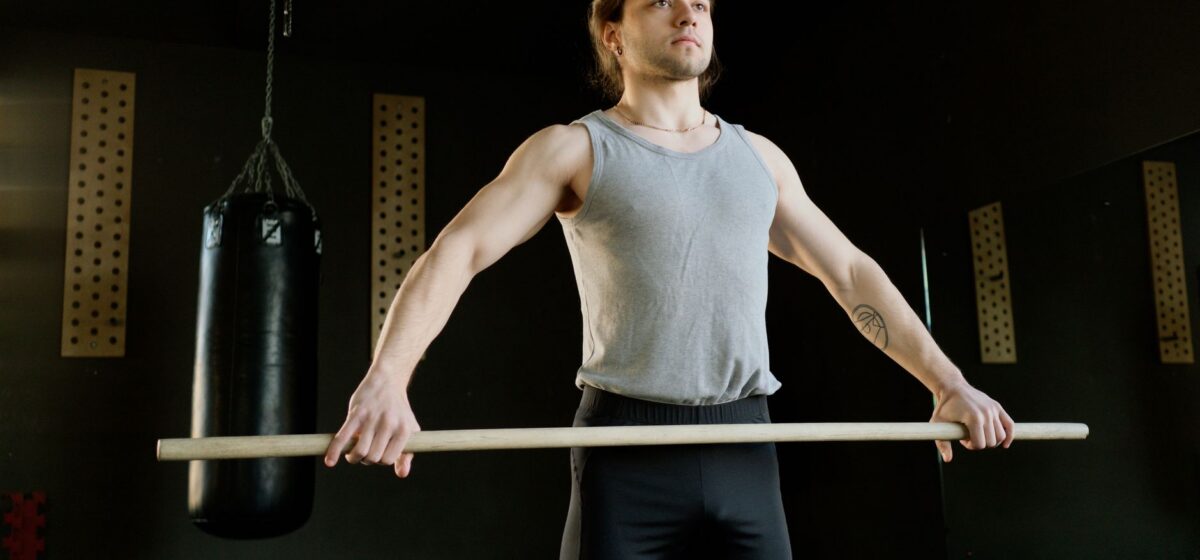

The most common fear in a fight gym is that lifting weights will make a fighter slow, stiff, and bulky. It is a stubborn myth. Strength and speed are not opposites, and the athletes who hit hardest late in a fight are almost never the ones who skipped the weight room. What separates a smart strength program from a bad one is not the amount of iron moved. It is whether the training respects the demands of the sport: short, violent efforts, repeated over rounds, at a bodyweight the fighter has to make on the scale.
Power to Weight Is the Real Metric
In most weight class sports, absolute strength matters less than strength relative to bodyweight. A heavier squat is useless if the extra muscle pushes a fighter two divisions north or gasses them out in round four. This is why coaches obsess over power to weight ratio rather than raw numbers on a barbell.
The goal is to add force output without adding mass the athlete does not need. That usually means training the nervous system rather than chasing size. Heavy loads for low repetitions teach the body to recruit more muscle fibers and to fire them faster, a quality researchers call rate of force development. You get stronger and more explosive while staying relatively lean. Bodybuilding style training, with high volume and short rest to maximize muscle growth, is the opposite of what most fighters want, because it builds tissue that has to be fed, carried, and cooled for twelve rounds.
Type II Fibers and the Physiology of a Fast Punch
A punch, a takedown, and a knee are all expressions of fast twitch muscle. Type II fibers contract quickly and produce high force, but they fatigue fast and rely heavily on the body’s short term energy systems. Heavy, explosive training preferentially develops these fibers and improves how efficiently the nervous system drives them, which is the physiological reason strength work can raise punching power without slowing the athlete down. The scientific literature on resistance training and rate of force development supports the principle that maximal and explosive strength work improves the speed at which force is produced, not just the peak amount.
Just as important is the energy behind that first blistering exchange. The phosphocreatine energy system fuels efforts lasting only a handful of seconds, exactly the length of a hard combination or a scramble. Conditioning that ignores this system in favor of long slow miles alone leaves a fighter aerobically fit but powerless in the moments that decide rounds.
GPP and SPP: The Two Halves of a Camp
Coaches structure a training year around two broad phases. Understanding the difference explains why a fighter squats in the off season and barely touches a barbell during fight week.
| Phase | What it means | Typical focus |
|---|---|---|
| GPP | General Physical Preparation | Building a broad base: maximal strength, work capacity, mobility, and durability, usually further from a fight |
| SPP | Specific Physical Preparation | Converting that base into fight ready qualities: power, speed, and sport specific conditioning as the bout approaches |
In the GPP block, a fighter can afford to get genuinely strong, lifting heavy and building the raw engine. As camp progresses into the SPP block, the emphasis shifts toward speed and power expression, and the volume of pure strength work drops so it does not interfere with skill work and sparring. This progression, moving from general to specific over time, is a core principle of periodization taught by bodies like the National Strength and Conditioning Association. Skip the base and the fighter has nothing to sharpen. Never sharpen it and the strength never shows up on fight night.
What Elite Coaches Actually Program
Strip away the marketing and most high level combat strength programs share a short list of tools:
- Heavy compound lifts. Squats, deadlifts, presses, and pulls for low repetitions to build maximal strength without much added mass.
- Explosive work. Olympic lift variations, jumps, medicine ball throws, and sprints to train the body to produce force quickly.
- Rotational and trunk power. The hips and torso transfer force from the ground into the fist, so anti rotation and rotational drills are prized over endless crunches.
- Energy system work. Interval conditioning that mirrors the work to rest ratio of the sport, alongside a genuine aerobic base built through disciplines like Muay Thai that demand output across many rounds.
Notice what is missing. There is little chasing of a mirror physique and little training to failure that leaves an athlete too sore to spar. The strength coach serves the fight, not the other way around.
Strength Without the Stiffness
The fear of getting slow usually comes from a real observation. A fighter who lifts heavy and does nothing else can lose the loose, whip like quality that makes striking fast. The fix is not to abandon strength but to pair it with speed work and constant skill practice so the nervous system keeps expressing force quickly. Full range lifting done with intent, combined with plenty of explosive movement, builds strength that transfers into the ring rather than sitting on top of it as dead weight.
You see the payoff in fighters who dig to the body round after round and still carry snap on their shots in the championship rounds. The pressure heavy, body punching approach that defines the Mexican style of boxing is only sustainable on top of serious conditioning and durable strength. The training does not make the style. It makes the style last.
The Bottom Line
Building strength without sacrificing speed comes down to a few honest principles. Train force relative to bodyweight, not in isolation. Develop the nervous system and the fast twitch fibers rather than just adding mass. Move from a general base to sport specific power as the fight nears. And never let the weight room crowd out the skill work that turns strength into a weapon. Done right, the fighter who walks to the ring is not slower for having trained hard. They are simply harder to move, harder to hurt, and still fast when it counts.