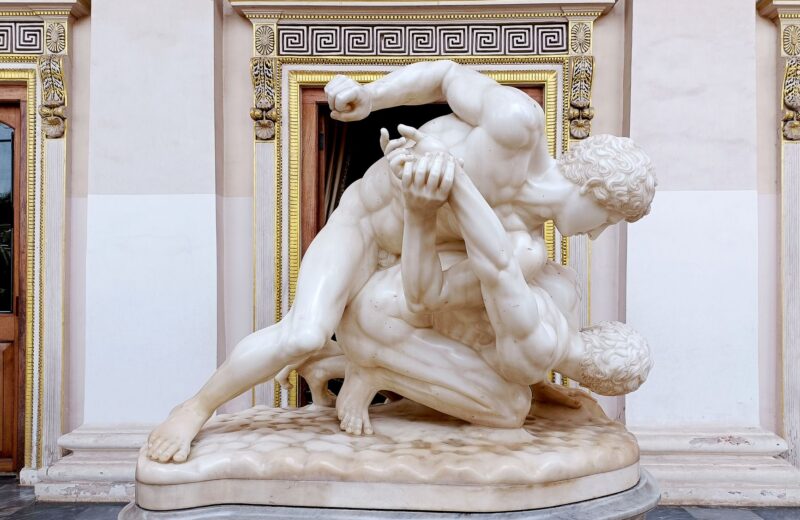
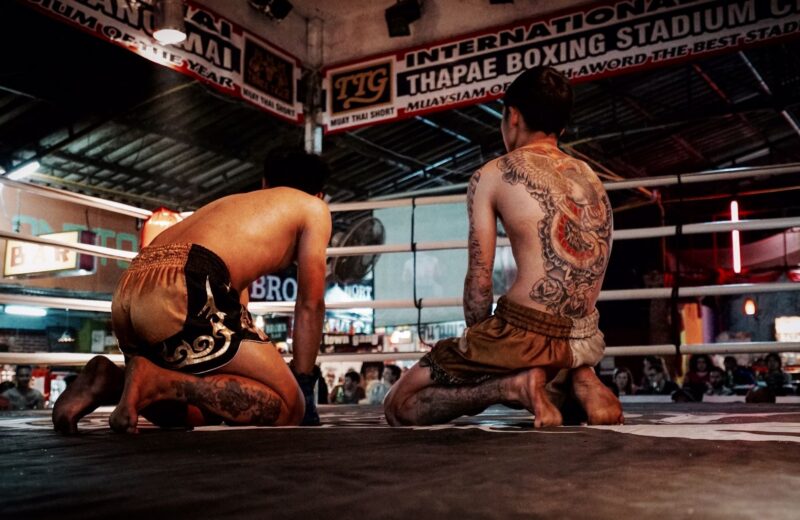
In February 1882, a twenty one year old schoolteacher named Jigoro Kano rented a room at Eishoji, a Buddhist temple in Tokyo’s Shitaya ward, laid down twelve tatami mats, and began teaching nine students. He called the place the Kodokan, roughly “the place for studying the way.” Within a generation that room had produced a training method that absorbed the jujutsu schools it came from, entered Japanese public education, and eventually became the first Asian martial art on the Olympic program.
The Jujutsu Kano Inherited
Kano was a slight, bookish young man who went looking for jujutsu because he was tired of being physically overmatched. He trained first in Tenjin Shinyo ryu under Hachinosuke Fukuda and later Masatomo Iso, a school rich in striking and close quarters grappling, then in Kito ryu under Tsunetoshi Iikubo, a school built around throwing and the manipulation of an opponent’s balance.
What he found was a tradition in decline. The Meiji Restoration had dissolved the samurai class, and the combat systems tied to it were losing students, funding, and social purpose. Many schools guarded their curriculum in scrolls and taught mostly through prearranged forms. Kano’s insight was not that these systems were ineffective. It was that they were being transmitted badly, and that their organizing principle had never been written down clearly.
He settled on one: seiryoku zenyo, maximum efficient use of energy. A second principle, jita kyoei, mutual welfare and benefit, gave the practice a social purpose beyond winning fights. The Kodokan still teaches both as the foundation of the art.
Why He Called It Judo and Not Jujutsu
The name change was deliberate. Jutsu means technique or art. Do means way, implying a path of development rather than a set of tricks. Kano wanted his school understood as physical education and character training that happened to be built out of combat technique, not as a fighting school with a philosophy bolted on afterward.
The structural changes mattered more than the name.
| Element | Older jujutsu schools | Kodokan judo |
|---|---|---|
| Primary practice | Kata with a cooperating partner | Randori, free practice against full resistance |
| Dangerous techniques | Kept in the live curriculum | Removed from randori, preserved in kata |
| Curriculum | School by school, often secret | Standardized and openly taught |
| Ranking | Licenses and transmission scrolls | Kyu and dan grades, worn on the belt |
| Stated purpose | Combat effectiveness | Physical education, moral training, contest |
The removal of strikes, small joint manipulation, and neck cranks from free practice is what made everything else possible. Once the technique set was survivable at full speed, students could train against genuinely resisting partners every session. That single decision is the reason judo outgrew its parent arts, and it is the same logic that later separated wrestling and boxing from arts that only ever drilled. It is a pattern worth comparing against wrestling’s own long path from folk practice to Olympic sport.
Ranks, Belts, and the Machinery of a Modern Sport
Kano awarded the first dan grades in 1883 and later marked them with a black sash worn over the training uniform. The kyu and dan structure was borrowed from the ranking conventions of the board game go, not from any warrior tradition. The full spectrum of colored belts below black is generally credited to Mikinosuke Kawaishi, who was teaching judo in France in the 1930s and wanted European beginners to see visible progress.
Kano also standardized the judogi, built a formal syllabus, wrote extensively, and trained instructors as instructors rather than as heirs. He was, above everything else, an educator. He served as principal of the Tokyo Higher Normal School and used that position to push judo into the schools.
The Contests That Settled the Argument
The story most often retold is a series of matches in the mid 1880s between Kodokan students and established jujutsu schools, including contests connected to the Tokyo Metropolitan Police. Kodokan representatives are said to have won or drawn the overwhelming majority. The surviving documentation is thinner than the legend suggests, and serious historians treat the details cautiously. What is not in doubt is the outcome: the police and the military adopted Kodokan methods, and by the early twentieth century judo had become the default grappling curriculum in Japan.
Kano, the Olympics, and the Long Wait
Kano became the first Asian member of the International Olympic Committee in 1909 and spent decades as Japan’s most visible ambassador in international sport. He died at sea in 1938 while returning from an IOC meeting in Cairo, twenty six years before his art appeared on the Olympic program.
- 1882 The Kodokan opens at Eishoji temple with nine students.
- 1909 Kano joins the IOC, the first member from Asia.
- 1938 Kano dies aboard ship, aged 77.
- 1964 Judo debuts at the Tokyo Games as a men’s event. In the open category final, the Dutchman Anton Geesink defeats Akio Kaminaga in front of a stunned home crowd.
- 1968 Judo is absent from the Mexico City program.
- 1972 Judo returns at Munich and has been on every program since.
- 1992 Women’s judo becomes a full medal sport at Barcelona, following a demonstration event in Seoul.
Geesink’s win in 1964 is the hinge moment. It proved on Japanese soil that judo no longer belonged to Japan, which was precisely what Kano had wanted and precisely what many of his countrymen had not prepared themselves for. The Olympic movement and the International Judo Federation have governed the competitive form ever since, including the 2013 rule changes that removed direct leg grabs and pushed contest judo further from wrestling.
How Judo Ended Up in the Cage
Kano sent students abroad to teach, and one of them changed combat sports permanently. Mitsuyo Maeda, a Kodokan man who traveled through the Americas giving demonstrations and taking challenge matches, settled in Brazil in the 1910s and taught what he called jiu jitsu to members of the Gracie family. What grew from that instruction became Brazilian jiu jitsu, an art that took judo’s groundwork and made it the main event rather than the follow up. A similar graft was taking hold at the other end of Eurasia, where Soviet instructors folded Kodokan throwing into the native wrestling styles of the republics.
The direct line is just as visible. Hidehiko Yoshida won Olympic gold in 1992 and later fought in PRIDE. Satoshi Ishii took gold in 2008 and turned professional. Karo Parisyan brought throws into the UFC when almost nobody else was using them. Ronda Rousey won Olympic bronze in 2008 and built a title reign on grip fighting and the armbar. Kayla Harrison won gold in 2012 and 2016 before moving to mixed martial arts.
What judo gives a fighter is specific: control of the collar and sleeve, the ability to break posture, and a relationship with the ground that starts from a throw rather than a scramble. It is a different toolkit than the one a striker carries, which is part of why the standing exchanges look so different between boxing and MMA.
What Kano Actually Built
Kano did not invent throws. He inherited them. What he built was a method for teaching combat technique safely, at speed, to large numbers of ordinary people, and a governing structure that could carry it across borders without fragmenting. Almost every modern grappling sport runs on some version of that template. Twelve mats in a temple room turned out to be enough.